The Next Chapter of Power Platform
Microsoft Power Platform has evolved considerably from its early positioning as a low-code platform for building business applications and automating repetitive tasks.
Today, organisations use Power Platform to develop enterprise applications, orchestrate business processes, integrate complex systems and extend Microsoft Dynamics 365.
In 2026, another significant shift is taking shape.
Artificial intelligence is becoming increasingly embedded in how applications are designed, developed and operated. Developers can describe application requirements in natural language, use AI-assisted tools to generate interfaces and build intelligent experiences that interact with enterprise data.
At the same time, the distinction between low-code development and traditional software engineering is becoming less rigid.
Power Platform is evolving from a low-code development environment into a broader enterprise application engineering platform where AI, code and low-code capabilities work together.
For technology leaders, this creates opportunities to accelerate delivery. But it also introduces important architectural decisions around application design, security, governance and long-term maintainability.
1. AI-Assisted Development Is Changing How Applications Are Built
Traditionally, developing a Power Platform solution involved several activities: understanding business requirements, designing Dataverse tables, configuring application interfaces, creating automation flows and integrating external systems.
AI-assisted development is beginning to change this workflow.
Power Apps Plans allows makers to describe a business problem using natural language and supporting material, such as screenshots or process diagrams.
The experience can help produce a solution plan covering requirements, user roles, data structures and application components.
Depending on the scenario and available features, this may include Dataverse tables, applications, workflows and agents.
The objective is to reduce the effort required to move from an initial business requirement to a working solution.
What This Means for Enterprise Teams
Consider an organisation that needs an internal supplier onboarding application.
Rather than beginning with individual screens and tables, the team could describe the intended process:
"Create a supplier onboarding solution that captures supplier details, manages compliance documents, supports internal approvals and tracks onboarding progress."
AI-assisted planning could help establish an initial solution structure.
However, this does not eliminate the need for solution architecture.
The generated design still needs to be evaluated against enterprise requirements, including data ownership, security, integrations, validation rules and application lifecycle management.
AI can accelerate solution creation, but architectural accountability remains with the delivery team.
2. Generative Pages Are Expanding the Power Apps Experience
One of the notable developments in Power Apps during 2026 is the expansion of generative pages for model-driven applications.
Generative pages allow developers to describe a desired user experience in natural language and create application pages using AI-assisted development.
Microsoft's 2026 release documentation records general availability for broader global use of generative pages from April 2026.
Microsoft also documents workflows using external AI coding tools, including GitHub Copilot CLI, to create and modify generative pages.
This introduces an interesting development model: developers can combine natural-language instructions with generated React and TypeScript code while continuing to use Dataverse and model-driven applications.
Why This Matters
Traditional model-driven applications provide structured forms, views, dashboards and business process experiences.
These are effective for many enterprise scenarios, but some requirements demand richer interaction patterns.
Examples include:
- Interactive customer journey timelines.
- Operational command centres.
- Visual exception management workspaces.
- Complex relationship exploration.
- Role-specific analytical dashboards.
Generative pages provide another option for delivering these experiences.
An Important Architectural Consideration
Generative pages should not automatically replace established application development approaches.
Developers still need to evaluate accessibility, security, maintainability, performance and supportability.
Some integration capabilities, including certain connector and custom API scenarios, remain documented as preview features.
For complex applications, teams should compare generative pages with custom pages, Power Apps Component Framework (PCF) controls and fully custom applications.
The appropriate choice depends on the required user experience, extensibility, performance characteristics and lifecycle requirements.
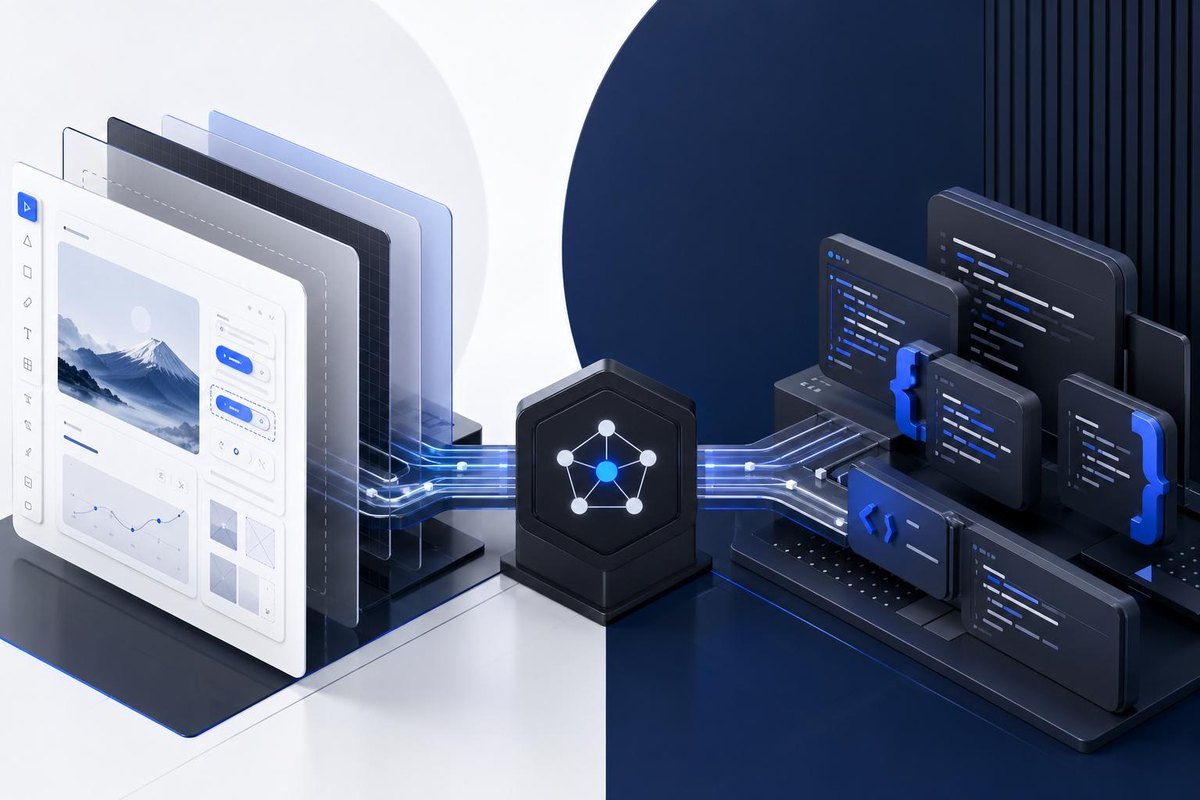
3. Low-Code and Pro-Code Are Converging
Power Platform has traditionally been associated with citizen development and low-code productivity.
However, enterprise implementations increasingly require professional software engineering practices.
Developers may need to build custom APIs, create reusable components, integrate enterprise services, manage source code and automate deployments.
Recent Power Platform investments reinforce this direction.
Microsoft's documentation describes code-first development experiences for generative pages, local development tooling, CLI-based workflows and integration with AI coding assistants.
These capabilities allow developers to work with familiar engineering tools while retaining Power Platform's application and data capabilities.
What Does This Mean for Application Architecture?
Organisations now have several implementation approaches available.
| Requirement | Potential approach |
|---|
| Standard data entry and business processes | Model-driven Power Apps |
|---|
| Highly tailored low-code interfaces | Canvas apps |
|---|
| Rich interfaces within model-driven apps | Generative pages or custom pages |
|---|
| Specialised reusable UI components | PCF controls |
|---|
| Custom application experiences | Code apps or external applications |
|---|
| Business process orchestration | Power Automate and integration services |
|---|
| Enterprise data and business logic | Dataverse, APIs and supporting services |
|---|
These approaches are not mutually exclusive.
A single enterprise solution may combine model-driven applications, custom components, Power Automate, Dataverse and Azure services.
The challenge for architects is to select the right technology for each requirement rather than forcing every capability into one development model.
4. Dataverse Remains a Critical Enterprise Foundation
As application development becomes more AI-assisted, the importance of enterprise data architecture does not diminish.
Dataverse provides structured data storage, relationships, security capabilities and extensibility for many Power Platform and Dynamics 365 solutions.
However, enterprise-scale implementations require careful design.
Data Modelling
Tables and relationships should reflect business concepts and operational requirements.
AI-generated data models may provide a useful starting point, but they still require validation for ownership, cardinality, security and lifecycle considerations.
Performance and Scalability
Large transaction volumes, complex queries, integrations and high-frequency updates can affect application performance.
Architects should consider query design, indexing options, API limits, concurrency and appropriate data access patterns.
Integration Architecture
Dataverse frequently participates in broader enterprise integration landscapes.
Depending on the requirements, organisations may use Dataverse APIs, event-driven integration, Azure services, Power Automate or data integration pipelines.
Data Governance
Security roles, ownership models, auditing, retention policies and data classification remain essential.
As AI makes application development faster, the quality of the underlying data architecture becomes even more important.
Poorly designed data models can create technical debt regardless of how quickly the application interface was generated.
5. Governance Must Evolve Alongside AI-Assisted Development
Faster application creation is valuable, but it can also accelerate the introduction of unmanaged applications and inconsistent engineering practices.
An organisation may already have hundreds of Power Apps, flows, connectors and customisations across multiple environments.
AI-assisted development introduces additional questions.
Who is permitted to generate and deploy applications? How are generated components reviewed? Which data sources can AI-assisted applications access? How are dependencies, changes and security risks managed?
Microsoft's Power Platform governance investments include capabilities relating to environment administration, agent inventory, operational health and improved development lifecycle integration.
For enterprise adoption, governance should cover both the platform and the solutions built on it.
Key Governance Priorities
Environment strategy: Establish clear boundaries for development, testing, production and experimentation.
Application lifecycle management: Use source control, managed solutions and repeatable deployment processes.
Security: Apply least-privilege access, appropriate identity models and data protection policies.
Solution quality: Review AI-generated code and configurations against organisational standards.
Operational visibility: Monitor application usage, failures, integrations and supporting automation.
Ownership: Ensure business-critical applications have accountable owners and support arrangements.
Governance should enable innovation without allowing uncontrolled complexity to accumulate.
6. The Changing Role of the Power Platform Developer
AI-assisted development is changing the activities developers perform, but it does not remove the need for technical expertise.
Developers may spend less time creating repetitive application structures and more time reviewing generated solutions, implementing complex integrations and addressing architectural concerns.
Skills in the following areas will remain valuable:
- Dataverse architecture and security.
- Application design and user experience.
- Integration patterns and API development.
- TypeScript, React and custom component development.
- ALM, testing and deployment automation.
- Performance engineering and observability.
- AI governance and secure agent integration.
The role is increasingly about combining platform capabilities with engineering judgement.
For organisations, this suggests that Power Platform delivery teams should not be organised solely around low-code configuration.
They may benefit from combining business analysts, functional consultants, solution architects, Power Platform developers and professional software engineers.
7. What Should Organisations Do Next?
Technology leaders should approach these developments as an opportunity to reassess their Power Platform strategy.
Rather than adopting every new feature immediately, organisations can take a structured approach.
Review the Existing Application Portfolio
Identify applications that are difficult to maintain, rely on unsupported patterns or require significant user experience improvements.
Evaluate AI-Assisted Development
Select a controlled use case to assess how AI-assisted planning and code generation affect development speed, solution quality and maintainability.
Revisit User Experience Architecture
Compare model-driven apps, canvas apps, generative pages, PCF controls and custom applications against real business requirements.
Strengthen Engineering Practices
Ensure applications use appropriate source control, testing, deployment automation, security reviews and operational monitoring.
Establish AI Development Guardrails
Define how AI-generated solutions are reviewed, validated and approved before production deployment.
Measure Outcomes
Assess improvements in delivery time, development effort, application quality and ongoing support costs.
The objective should be sustainable engineering productivity rather than simply generating more applications.
Conclusion: The Future of Power Platform Is Hybrid, Intelligent and Engineering-Led
Power Platform is entering a new phase in which AI-assisted development, low-code capabilities and professional engineering practices increasingly intersect.
For organisations, this creates opportunities to modernise applications, accelerate development and introduce more intelligent business experiences.
But faster development does not eliminate architectural complexity.
Trusted data, appropriate technology selection, secure integrations and disciplined application lifecycle management remain essential.
The organisations that benefit most from Power Platform's evolution will be those that combine AI-driven productivity with strong enterprise engineering foundations.